Skip to content
SeSTASeven Sisters Development Assistance

Our stories

Journeys of change

Stories of women and families across Northeast India who built new livelihoods, and what made the difference. 5 stories, grouped by theme, from our monthly newsletter NE Rural Connect.

Walk through the gallery

01Livestock and poultry

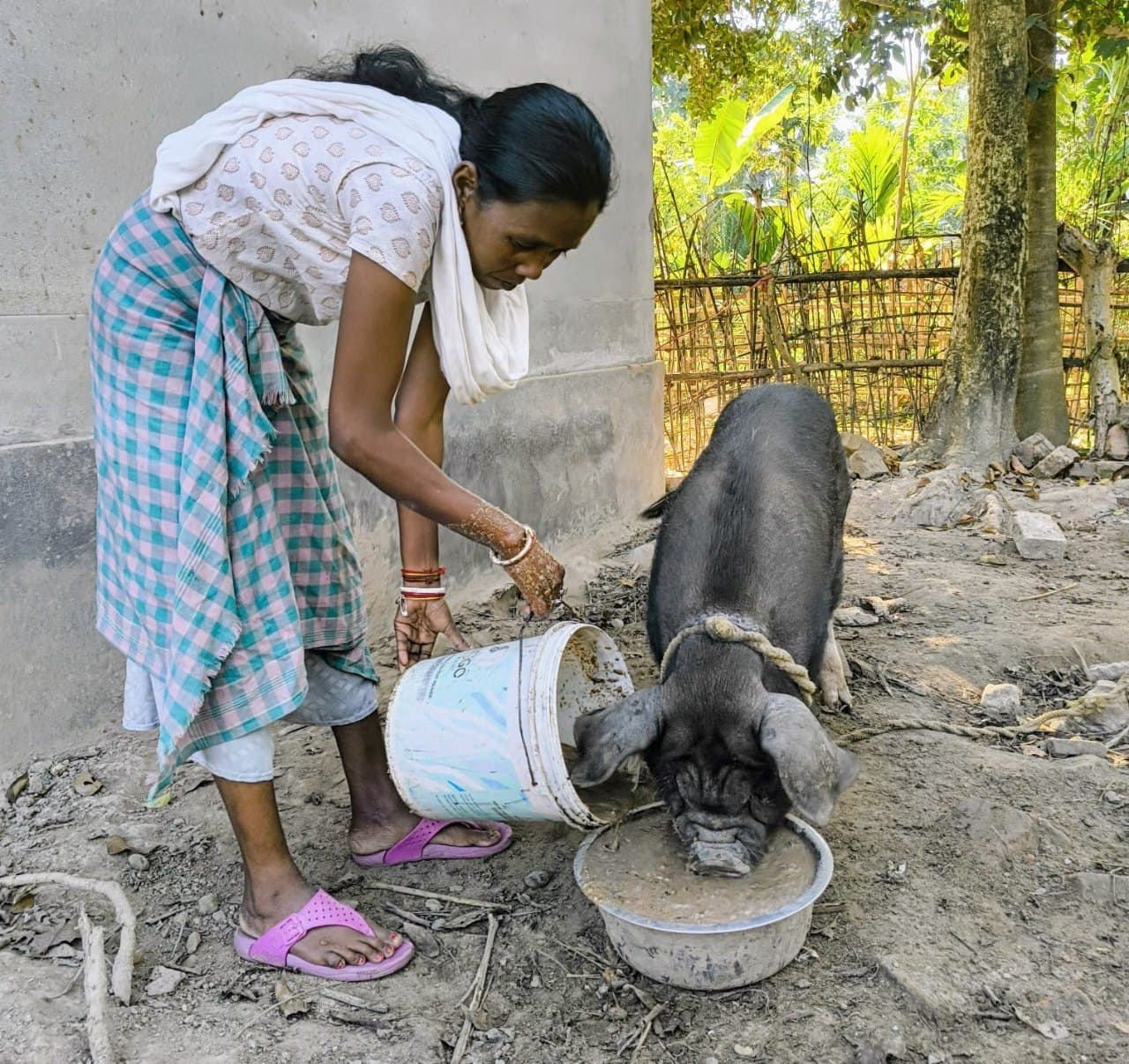
Januki Kujur feeding her pig

From daily wages to a pig farm of her own

Januki Kujur · Choibari TE village, Chapar Salkocha block, Dhubri, Assam · Pig rearing

₹60,000 from her pigs in a year, and her child now in a private school

Januki and her husband lived on daily wages that barely covered the basics. She raised the idea of pig rearing at her Village Organisation meeting, took a ₹20,000 Rang De loan with SeSTA’s help, and learned feeding, biosecurity and vaccination.

In Choibari TE village, under Chapar Salkocha block in Dhubri, Januki Kujur and her husband Bawla relied entirely on daily wage labour. However hard they worked, it barely covered the basics, and a good education for their child seemed out of reach.

Determined to change things, Januki shared an idea at her Village Organisation meeting: she wanted to rear pigs. Encouraged by SeSTA professionals, she secured a ₹20,000 loan through Rang De to start, and was trained in feed management, biosecurity and vaccination.

With new skills and resources, she reared and sold pigs over the following year and earned ₹60,000, a turning point for the family. The income has reduced their reliance on daily wages and let them enrol their child in a private school.

Januki’s journey shows what access to resources and determination can do together, and it has become an example for other women in her village to take up scientific livestock rearing.

First told in NE Rural Connect, August 2025
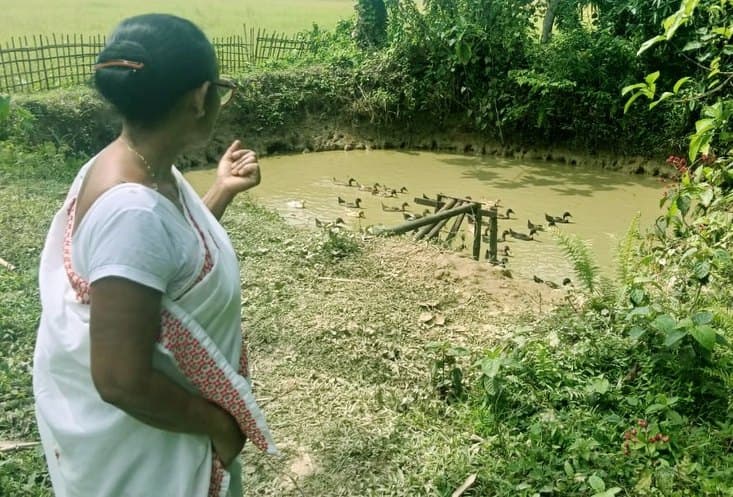
Hirannaya Boruah beside the pond where her ducks swim

A backyard of ducks and hens that pays every day

Hirannaya Boruah · Lahing Noisiporia village, East Jorhat block, Jorhat, Assam · Backyard poultry and duck rearing

At least ₹8,500 a month from eggs alone, and a flock that keeps growing

As her family’s only earner, Hirannaya lost birds to disease and earned little from seasonal farming. Training in scientific poultry and duck rearing changed that: her first 50 birds made ₹12,000, and today she sells about 20 eggs a day.

Hirannaya Boruah, a member of Kaberi SHG in Lahing Noisiporia village, used to depend on seasonal farming: paddy, a few vegetables and some poultry. Without technical knowledge her birds often died and her yields stayed low. As the only earner in her family, her hard work rarely turned into a steady income.

In 2023 SeSTA saw her passion for livestock and supported her through the LIC HFL LIVE project. She was trained in scientific poultry and duck rearing: vaccination, feed management, biosecurity and how to build a proper shed. With ₹4,700 she started with 50 backyard poultry birds, lost only 5 chicks in the first cycle, and made a profit of ₹12,000.

Encouraged, she grew: a 150 sq. ft. shed, 100 chicks and 100 ducklings, with ₹20,000 more from the Community Investment Fund. In four months she sold 90 birds for ₹26,000 and 30 ducks for ₹15,000.

Today she keeps 65 ducks ready for sale and 20 laying birds, and sells about 20 eggs a day, earning at least ₹8,500 a month. The income pays for her children’s education, and her journey has become a source of hope for others in her community.

“With the right knowledge and timely support, even the smallest efforts can lead to great change. Today, I stand stronger, more confident, and self-reliant.”

Hirannaya Boruah

First told in NE Rural Connect, August 2025
02Women in enterprise

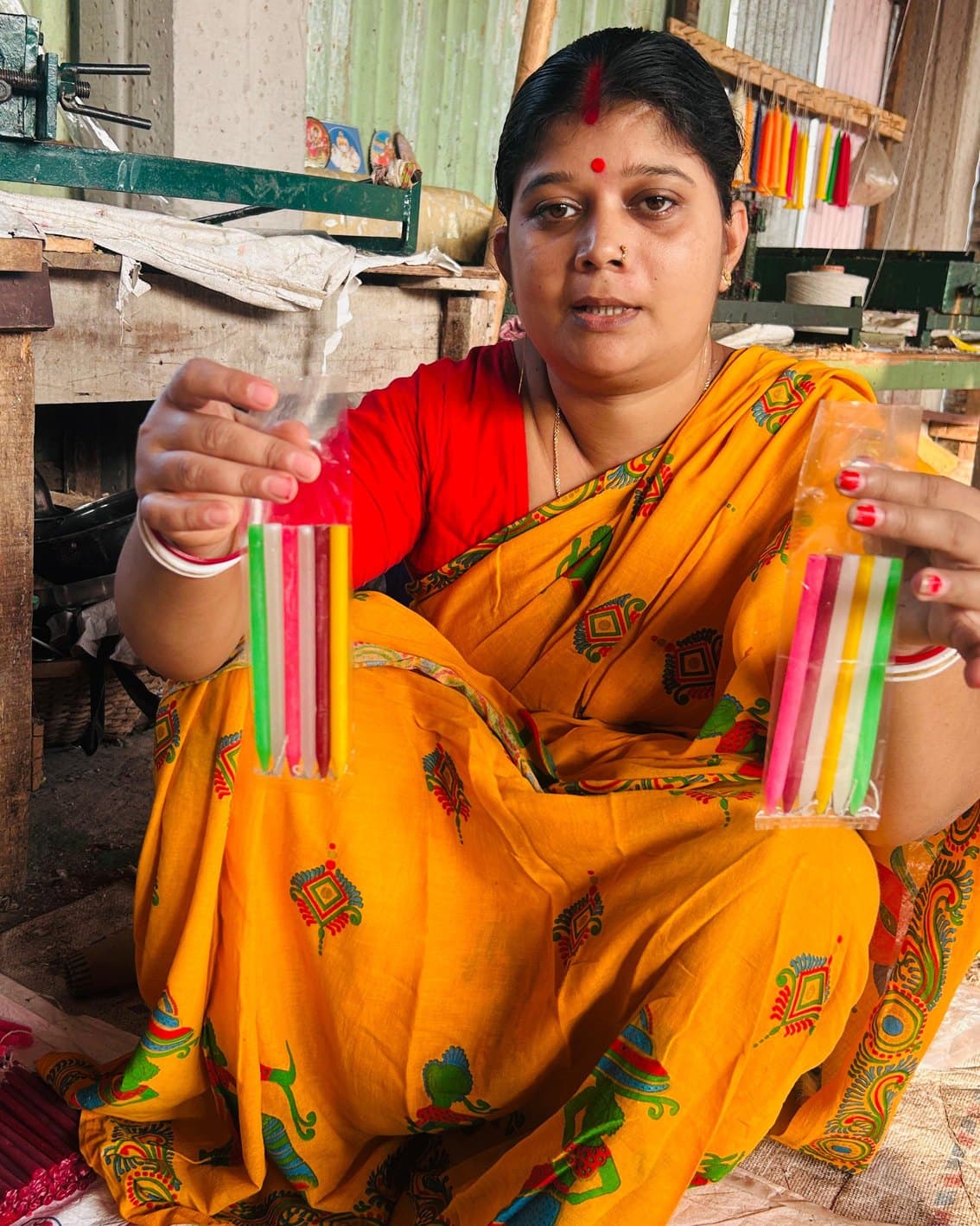
Ruma Das holding up bundles of her candles

Candles that light more than homes

Ruma Das · Durganagar village, Jirania RD block, West Tripura · Rural entrepreneurship

₹35,000 a month, three times what her family earned before

Ruma started making candles with ₹5,000 borrowed from her self-help group, but struggled without market and business skills. SeSTA’s Rural Entrepreneur Development Programme taught her bookkeeping, finding buyers and business planning, and helped her secure a ₹1.5 lakh bank loan.

In Durganagar village, under Jirania RD block in West Tripura, 36-year-old Ruma Das once depended on her husband’s uncertain daily wages and longed for a steady income of her own. Her turning point came when she joined the Loknath Self Help Group and, on a visit to a nearby village, discovered candle-making.

She started small, with ₹5,000 borrowed from her SHG, but her first attempts faltered: she did not yet know the market or how to manage a business.

Everything changed when she joined SeSTA’s Rural Entrepreneur Development Programme, supported by Axis Bank Foundation, in December 2024. She learned to keep accounts, record transactions, find buyers and prepare a business plan. With SeSTA’s mentorship she secured a ₹1.5 lakh loan from Tripura Gramin Bank and expanded with better equipment, bulk raw materials and branded packaging.

Today Ruma makes 2,000–2,500 candles a month in 15 varieties and earns a steady ₹35,000 a month, three times her family’s earlier income. She employs two women from her village part-time and plans to create work for 8–10 more. Two other SHG members have joined the programme, and more women have begun exploring business ideas of their own.

First told in NE Rural Connect, November 2025

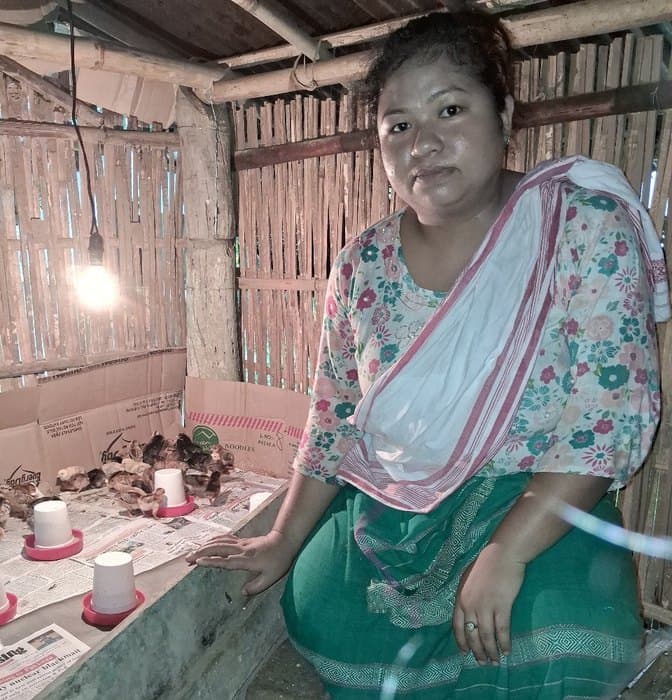
Sonia Rabha in her poultry shed

A tea stall, a poultry shed and a life of her own

Sonia Rabha · Projectpara, Manikganj, Resubelpara block, North Garo Hills, Meghalaya · Poultry and small enterprise

₹8,820 from her first batch of 21 birds, alongside a busy tea stall

A single mother once dependent on uncertain farm income, Sonia found strength in her self-help group and producer group. With ₹7,000 from the SBIF LEAP fund and ₹6,000 of her own, she built a poultry shed and learned scientific rearing.

In Projectpara, Manikganj, under Resubelpara block, Sonia Rabha runs a small tea stall near Manikganj Higher Secondary School. It has become a gathering place for students and villagers, full of warmth, conversation and fresh tea.

Life was not always like this. As a single mother dependent on uncertain farm income, Sonia struggled. She found new strength when she joined the Pana Laxmi Self Help Group and later the Diamond Producer Group, where she learned the power of saving, working together and running an enterprise.

Her journey took a new turn when she received ₹7,000 from the SBIF LEAP fund, facilitated by SeSTA, and added ₹6,000 of her own. With the team’s support she built a small poultry shed and bought her first chicks. Training in the package of practices for poultry taught her proper feeding, vaccination and hygiene.

In her first cycle she sold 21 birds for ₹8,820, with more ready for the festive season. Her tea stall keeps thriving alongside: both her livelihood and her symbol of independence.

First told in NE Rural Connect, November 2025

03Farming and the land

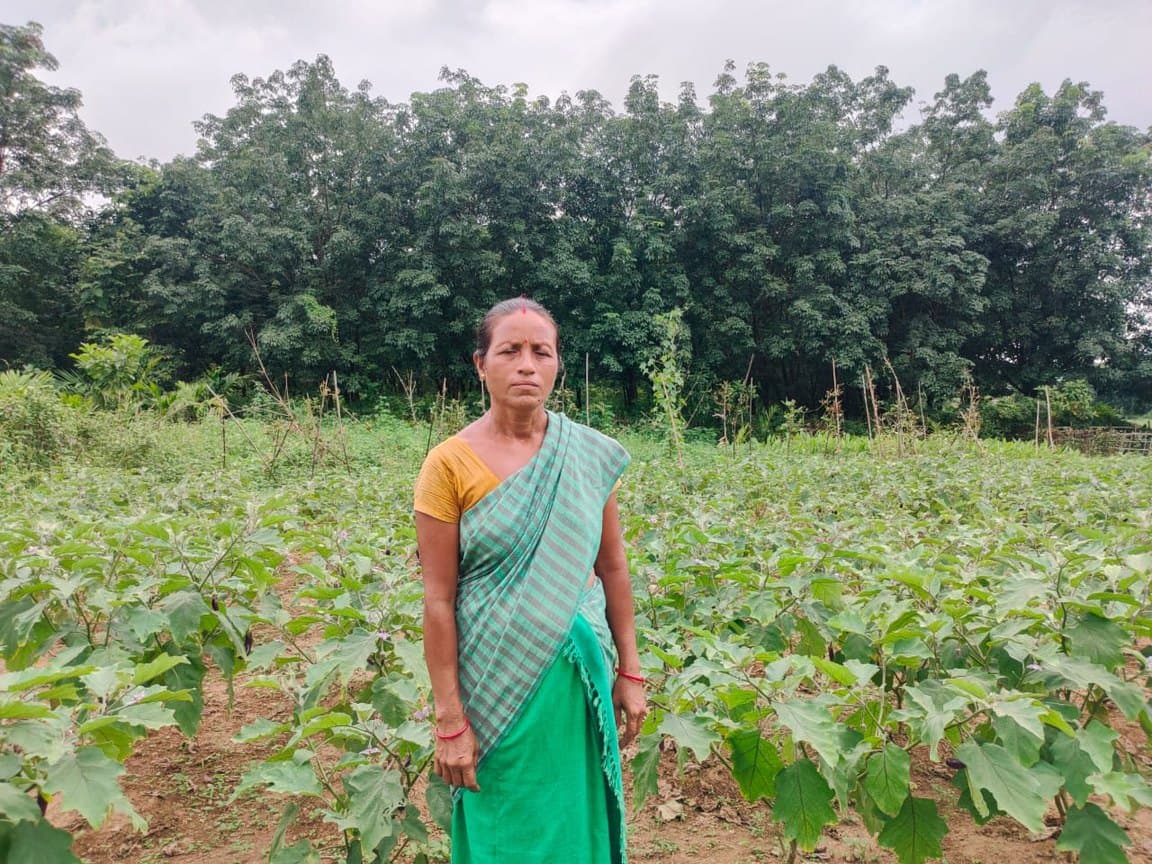
Sewali Nath standing in her brinjal field

Healthy soil, chemical-free vegetables and a growing income

Sewali Nath · Upper Baguan village, Kushdhowa block, Goalpara, Assam · Organic farming and vermicompost

₹25,000 from organic vegetables on 2 bighas, grown with her own compost

With support from Ashraya Hastha Trust and SeSTA, Sewali began making vermicompost and growing vegetables without chemicals. Her brinjal, king chilli and gourd are now sought after in Goalpara’s markets.

Sewali Nath of Upper Baguan village, in Goalpara’s Kushdhowa block, is showing her neighbours a different way to farm. With support from Ashraya Hastha Trust and SeSTA, she began producing vermicompost and growing vegetables organically.

She has made more than 150 kg of vermicompost, which she uses on her vegetable and paddy fields to enrich the soil naturally. On her 2 bighas she grows brinjal, king chilli and gourd without chemicals, and has earned ₹25,000, a big boost to her family’s income. Through convergence with the IBS scheme she has also planted areca nut on half a bigha.

Her produce is in demand in local Goalpara markets, where more and more people want healthy, chemical-free food. Her journey shows how organic farming can lower costs, improve the soil and build a livelihood that lasts.

First told in NE Rural Connect, September 2025