
Climate Resilience
Farms and landscapes that withstand a changing climate.
SeSTA works with villages to map their natural resources, plan for floods and droughts, and shift to farming that restores soil, water and trees.
The work, step by step
The Process behind every progress
- 1
Map
INRM and GIS mapping
Villages map land, water, forests and flood zones through GIS-based Integrated Natural Resource Management planning.
- 2
Plan
Village Climate Action Plan
Each village, through bodies such as the VCDC, prepares a plan and submits it to the block as a DPR.
- 3
Adapt
Agroecology and water harvesting
Farmers use bio-inputs, organic manure, soil tests, flood-tolerant seeds, farm ponds, jal kunds and solar energy.
- 4
Restore
Agroforestry
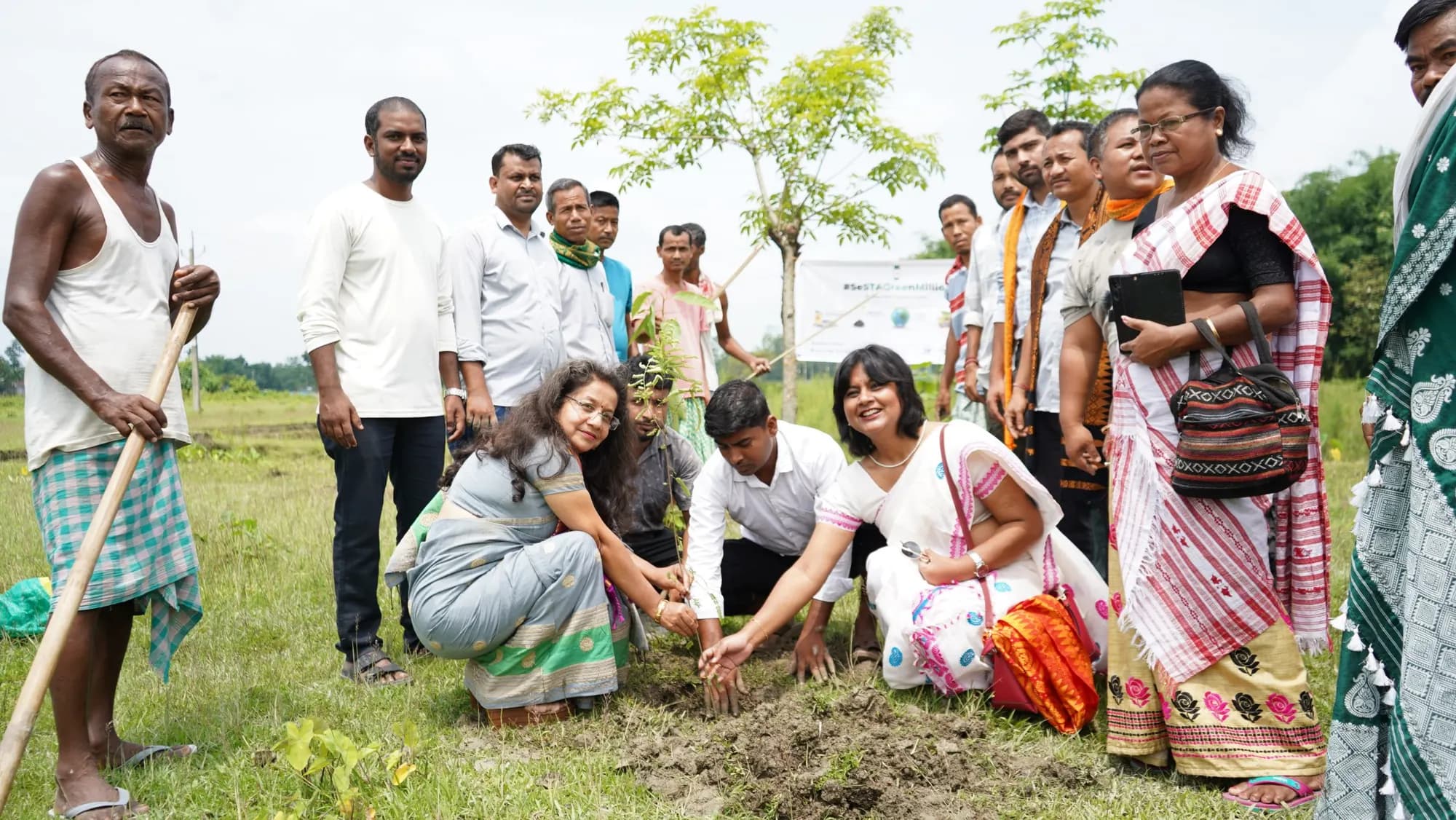
Degraded and unused land is planted with local fruit and woody species.
Women-led, climate-resilient and low-carbon farming landscapes
In numbers
What the numbers show
Flood response, from states to households
Support reached families across two states in the flood months.
- 2states
- 6districts
- 55villages
- 6,127households
₹34,29,200 in support
Land under agroforestry
Degraded and unused land mapped and planted with local fruit and woody species.
At a glance
Key numbers
- Integrated Natural Resource Management plans
- 121
- villages planned with GIS in Barbari, Baksa
- 58
- farmers using agroecological practices
- 25,181
- farmers in plantation initiatives
- 3,208
- saplings planted in Morigaon and Karbi Anglong
- 24,000
- farmers given soil organic carbon tests
- 1,200
- progressive farmers using solar solutions
- 16
- households reached in flood response
- 6,127
From the field
Stories of change
First instalment of ₹11,250, two more to come
Planted 500 Bambusa tulda saplings on 0.5 hectare of unused land under the National Bamboo Mission, turning barren land into a productive asset.
Satya Laxmi DebbarmaBargasia Para, West Tripura
Arsenic filters for 100 households
A clean water pilot installed 13 raised handpumps for flood months, 3 water harvesting structures for rabi irrigation and 34 solar street lights for safe movement at night.
Nalirpaam villagePakabetbari block, Barpeta, Assam
Together
Who makes it happen
- 01Women’s collectives
- 02Field teams
- 03GIS team
- 04Forest Department and MBMA
- 05Selco Foundation